Fish, East Asian
Jjamppong seafood noodle soup
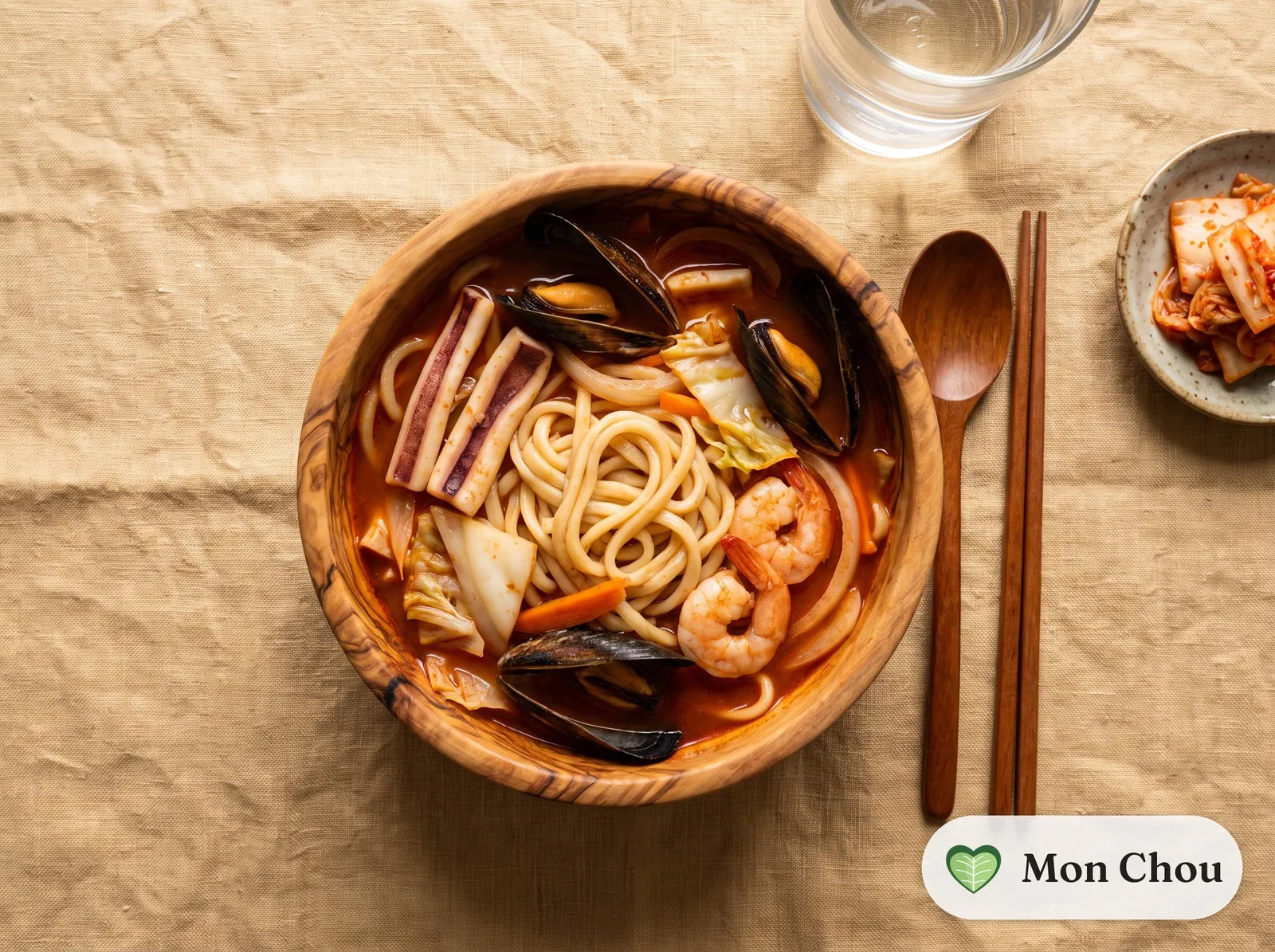
Jjamppong is a Korean noodle soup in a spicy red broth, loaded with mussels, squid and shrimp. It serves 4, takes 40 minutes, falls into the medium difficulty range, and costs about €5.40 per person. The key to getting it right is stir frying garlic, onion and chili before adding the broth.
It sizzles, it steams, it smells like the sea, jjamppong is that fiery Korean noodle soup loaded with seafood that wakes up a Tuesday night.
- Total time
- 40 min
- Difficulty
- Medium
- Cost per person
- €5.40
- Calories per person
- 560 kcalcalculated by Kiloach, your weight coach
- Season
- Winter, Fall
Jjamppong is that bright red bowl that steams and bites back from the first sip of broth. Gochujang and Espelette pepper bring a clean, bold heat, carried by the briny flavor of mussels, squid and shrimp cooked together in the same broth. The julienned vegetables keep some crunch, so the soup never turns mushy.
It's the kind of dish that wakes up a fall or winter Tuesday, when you want something hot with real character. Mon Chou suggests it more for adults and teens who like heat, not for the youngest eaters. Give yourself a bit of time to slice the vegetables, but once the pot is on the stove, everything moves fast.
The ingredients
Pantry
- Thick wheat noodles 400 g
- Espelette pepperoften in the pantry 2 tsp
- Gochujang chili paste 1 tbsp
- Soy sauceoften in the pantry 2 tbsp
- Neutral oiloften in the pantry 2 tbsp
- Fish brothoften in the pantry 1.2 l
Fish counter
- Squid tubes 200 g
- Mussels 500 g
- Peeled shrimp 200 g
Fruits and vegetables
- White cabbage 200 g
- Onion 1
- Carrots 1
- Zucchini 1
- Garlic 4 cloves
Allergens Gluten, Mollusks, Shellfish, Soy
The step by step recipe
-
Slice the cabbage, onion, carrot and zucchini into thin strips, mince the garlic, and cut the squid into rings.
Keep the strips thin, the soup should be easy to eat with chopsticks.
-
Heat the oil in a large pot, stir fry the garlic, onion and chili, then add the gochujang paste. 3 min
Stir quickly, the chili burns easily and turns bitter.
-
Add the vegetables, stir fry for three minutes, then pour in the broth and soy sauce and bring to a simmer. 8 min
The vegetables should keep some crunch.
-
Cook the noodles separately in a pot of boiling water, then drain them. 6 min
Cooking them separately keeps the broth clear, without starch.
-
Drop the mussels, squid and shrimp into the broth and cook until the mussels open. 5 min
Discard any mussels that stay closed.
-
Divide the noodles among large bowls and pour the broth with the seafood over top.
Add a bit more chili at the table for anyone who wants extra heat.
Our tips to get it right
- Scrub the mussels well before cooking and pull off the beard, that keeps grit out of the broth.
- Prep every ingredient before you turn on the heat, the cooking moves fast once the pot is hot.
- Taste the broth before adding the seafood, that's your last chance to adjust the salt or heat.
The variations
- Swap the squid for cooked octopus or strips of white fish if you want a more tender bite.
- For a vegetarian version, skip the seafood, use vegetable broth, and add shiitake mushrooms and firm tofu instead.
- For kids or sensitive palates, cut the gochujang in half and leave out the Espelette pepper, the broth stays flavorful without the burn.
What to serve it with
- Tangy kimchi
- Steamed white rice
- Iced green tea
Storage
The broth keeps for 2 days in the fridge in a sealed container, kept separate from the noodles so they don't go soft. It freezes well without the seafood or noodles, for up to 2 months. Reheat it gently over medium heat and add freshly cooked noodles at the last minute.
Questions about this dish
Can I substitute gochujang if I don't have any?
You can use a teaspoon of sriracha mixed with a pinch of sugar instead. The flavor will be less deep, but the dish stays plenty spicy.
Can I make the broth ahead of time?
Yes, make the vegetable and spice broth up to two hours ahead, then reheat it and add fresh seafood at the last minute. Seafood cooked too early turns rubbery.
How do I know the mussels are good before cooking?
A closed mussel, or one that closes when you tap it, is safe to cook. Toss any that stay open or have a cracked shell.
What noodles can I use if I can't find thick Korean noodles?
Japanese udon noodles work great thanks to their similar thickness. Avoid thin noodles, they'll get lost in the broth.
How long does it take to make a jjamppong seafood noodle soup?
Count 40 min in total, prep and cooking included. The recipe is rated “medium”.
How many calories are in a jjamppong seafood noodle soup?
About 560 kcal per serving, for a recipe meant for 4 people. Calories are calculated by Kiloach, your weight coach, the app that partners with Mon Chou.
How much does a jjamppong seafood noodle soup cost?
About €5.40 per serving, or €21.60 for 4 people, based on average supermarket prices.
What allergens does this recipe contain?
This recipe contains gluten, mollusks, shellfish, soy. Always check the labels of the products you buy.
East Asian cuisines
See all Meat
Meat 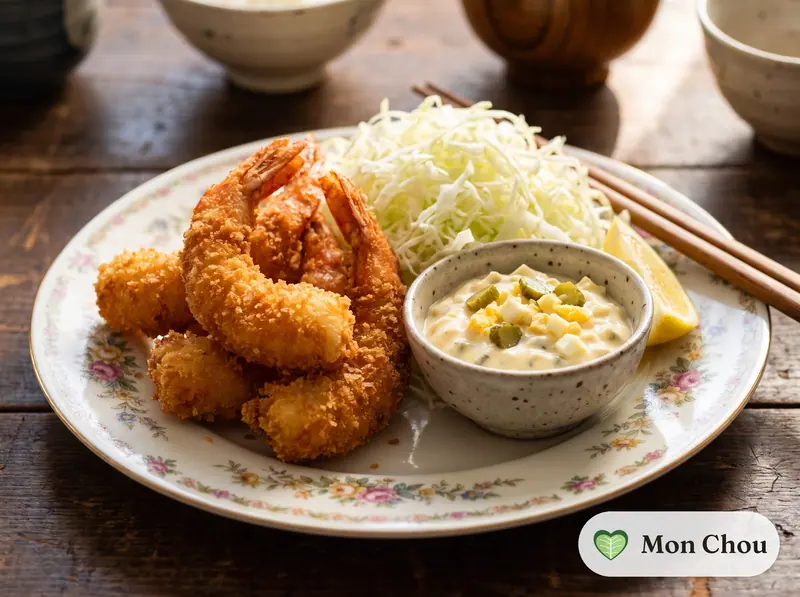 Fish
Fish Japanese style panko shrimp with cabbage and rice
35 min Easy €4.70 / person
690 kcalcalculated by Kiloach
 Meat
Meat 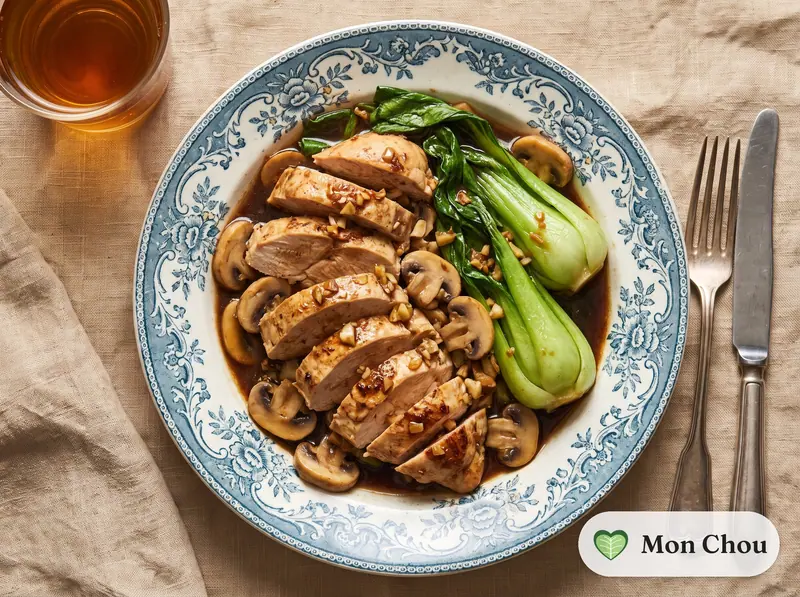 Meat
Meat Oyster Sauce Chicken with Bok Choy and Rice
30 min Very easy €3.00 / person
510 kcalcalculated by Kiloach
Recipes with carrots
See all Meat
Meat 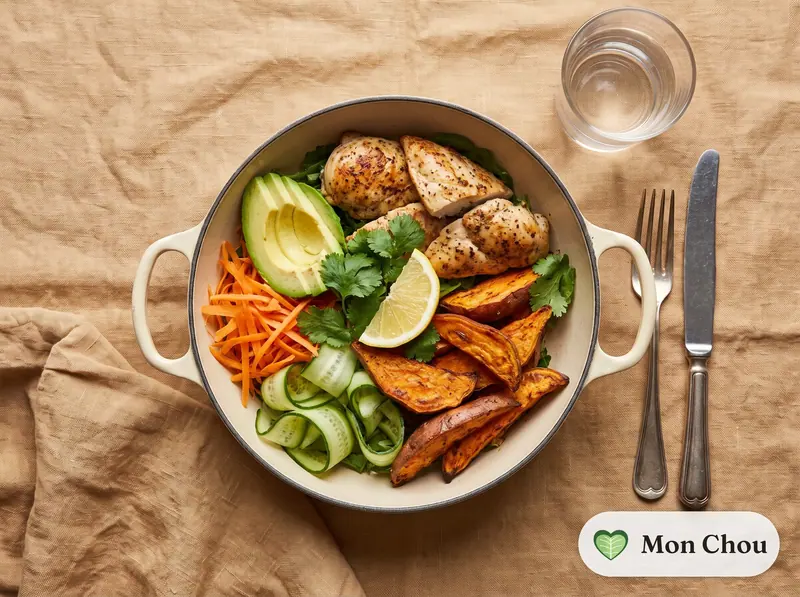 Meat
Meat Roasted chicken bowl with sweet potato and avocado
45 min Easy €3.30 / person
760 kcalcalculated by Kiloach
 Meat
Meat  Vegetarian
 Spring rolls with tofu, rice noodles, and peanut sauce
45 min Easy €2.80 / person
590 kcalcalculated by Kiloach